Jigsaw Culture emerged in the autumn of 2003 as a heavy, progressive and deeply creative band. The music could be intricate, atmospheric and occasionally quite abstract but there was weight and aggression in it too. We wanted to make something imaginative without losing the force that had drawn us towards heavy music in the first place. For me, it represented both a continuation and a return: a continuation of the experimentation I had pursued with Purity Cries and a return to heavier music which connected more naturally with the scene around me.
Purity Cries had always been part of the Bradford metal scene even if musically we tended to occupy its outer edges. We shared venues, friendships and audiences with heavier bands but the music itself was more gothic, industrial and reassuringly difficult to categorise.
Reeved had taken me away from that world for a while. It came from a different musical place with different instincts, influences and ambitions. I enjoyed the experience and learned from it but it never felt like a direct continuation of the creative path I had been following.
The route into Jigsaw Culture began with a chance conversation with Tony Wildwood one night in The Empress. After chatting with him about what I wanted to do next, he put me in touch with Chris Mills and thus the seeds for what was to become Jigsaw Culture were sown.
There was something slightly poetic about that. Years after helping draw me into my first genuinely collaborative musical project, Tony had once again pointed me towards something I needed at that point.
Chris and I initially got to know one another at a distance. What began as an introduction soon developed into a long exchange of text messages and emails, many of them considerably longer than either medium had probably been designed to accommodate. We talked about music, influences, ideas and what we might want from a band. Before we had played a note together, we had already started to establish a shared creative language.
Eventually we met in person and began trying to turn those conversations into something tangible. There was an immediate sense that we were interested in many of the same things even if we did not always approach them in quite the same way. We wanted to make music that was heavy but not restrictive, progressive without becoming clinical and ambitious without losing its emotional force.
Our first attempt at putting a line-up together involved Josh Tildesley, a very sweet yet shy bloke and an incredible bassist. He had only recently come through a particularly bad experience with his previous band and joining another so soon afterwards, with people he did not know and music that was already heading into fairly unusual territory, may simply have been overwhelming at that point.
Josh came along for one session but declined to pursue it any further. His involvement was fleeting yet worthy of mention. It must have taken some courage to give it a shot so soon after what he had been through.
After that initial false start, I approached my old friend Phil Shillam. Phil and I had known one another for around twelve years by that point and he had not played in a band for a little while. He joined us on bass and with the three of us working together, the beginnings of something more coherent started to emerge. The conversations and half-formed ideas Chris and I had been carrying around could finally begin to develop through rehearsal and collaboration rather than continuing to exist mainly in messages and imagined possibilities.
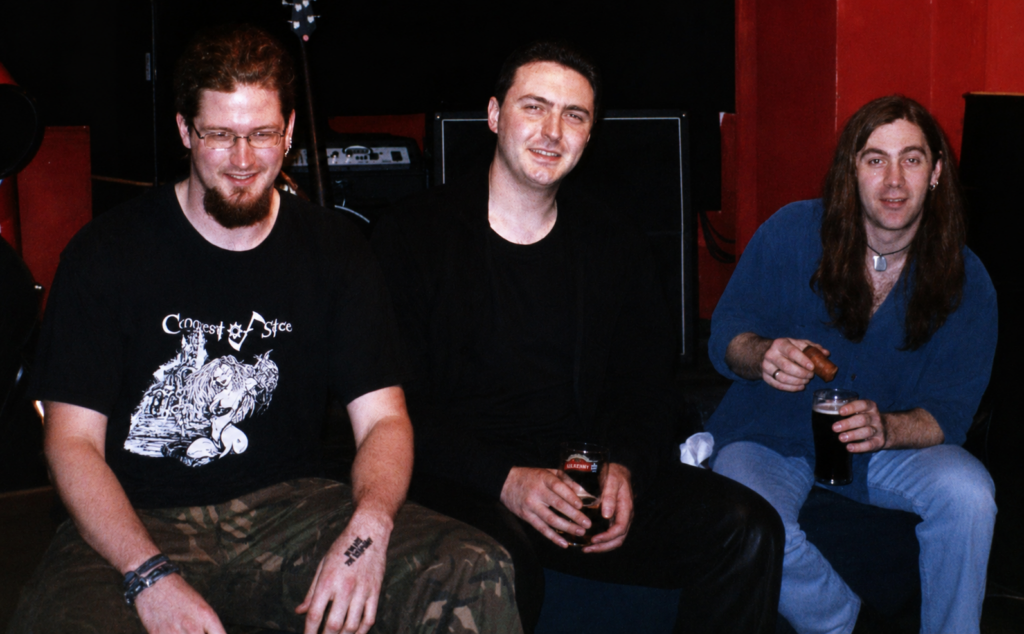
The band’s name came from two quite separate ideas. Phil was reading a science fiction novel featuring something called The Culture, while I had become rather taken with the word Jigsaw after hearing it used elsewhere. Neither felt quite right on its own and Jigsaw was already taken, so we combined the two and Jigsaw Culture was born.
Only many years later did I realise there may have been something quietly subconscious at work in my attraction to that particular name. At the time it simply felt right and I never questioned why. Looking back though, given everything else that was happening in my life around that period, I wonder whether I had been drawn to it for reasons I did not fully understand myself. If so, it was entirely unintentional. Sometimes our choices reveal things about us long before we recognise them ourselves.
For me, Jigsaw Culture became a sort of natural successor to Purity Cries. The music was heavier again while retaining the willingness to experiment that Purity Cries had encouraged in me. There was also a sense of reconnecting with the musical community around me while still making something imaginative, progressive and personal.
That balance was important. Returning to heavier music did not mean retreating into familiar ground or abandoning everything I had learned in the intervening years. Jigsaw Culture drew upon the same appetite for texture, atmosphere and unusual arrangements but placed those ideas within something more forceful.
It was also during Jigsaw Culture that my lyrical writing became markedly more abstract. I had written lyrics before but I had not yet entirely found my voice. Earlier words often felt as though they were serving the song or attempting to communicate something directly. With Jigsaw Culture I became less concerned with straightforward narratives and much more interested in imagery, fragments, associations and ambiguity.
Once Chris, Phil and I began working together, the intention was always to expand the band into a five-piece with a dedicated singer and keyboard player. The music already seemed to be asking for more than the three of us could comfortably provide and keyboards in particular offered another way of developing its atmosphere and scale.
Mel Jones joined on keyboards and proved to be a fantastic addition. She immediately understood what we were trying to achieve and added another dimension to the arrangements without making them feel unnecessarily cluttered. For a while, it felt as though the wider shape of the band was beginning to come together.
Creatively, the atmosphere reminded me a little of Dark Embrace. Everyone was open-minded and relaxed about where an idea might lead, and nobody seemed particularly interested in imposing rigid boundaries on the music.
Finding the right singer proved much more difficult.
Wayne Gardner was our first vocalist, at least on paper, and remained attached to the project for quite some time. In reality though, very little actual singing seemed to happen. Eventually it became apparent to all of us that the arrangement was not really working and we began looking elsewhere.
Russ Petcher came from a very different musical background rooted more in indie and grunge than progressive metal. He was a lovely bloke and deserves enormous credit for throwing himself into music that was unlike almost anything he had previously played or even listened to. He embraced the challenge wholeheartedly but when it came to developing new ideas, we were simply not hearing things in the same way. Nobody was particularly at fault. The musical gap between us was just too wide and eventually we agreed to go our separate ways.
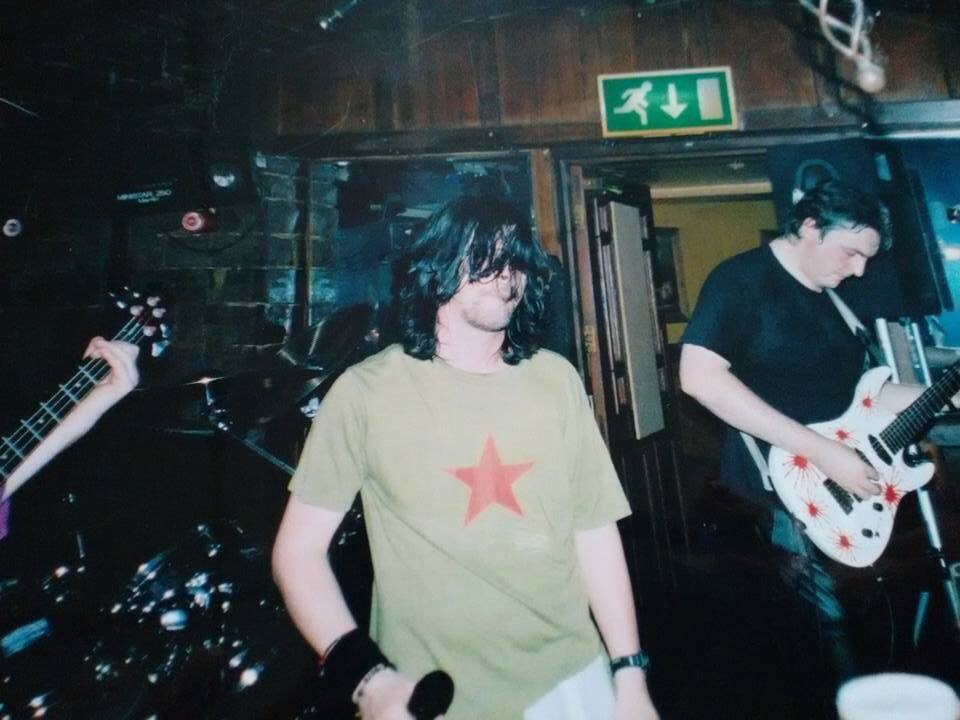
Simon Thorley then joined on second guitar with the intention of me taking over the vocal duties. He was genuinely excited about us playing together again and threw himself into the band enthusiastically. His playing was great, as it always had been, and none of what followed was his fault. He had simply arrived at the wrong time.
In reality, Simon was only with us for a handful of rehearsals. By then the project had already caught a cold and I wasn’t entirely convinced by the prospect of becoming a lead singer at the time. It was a role I had found myself drifting into by default more than once over the years rather than one I had actively sought.
When it became clear that Jigsaw Culture was not going to regain its momentum, Simon was visibly upset and I felt particularly bad for him. He had arrived full of enthusiasm for the band and for the opportunity to play together again only to find that the whole thing was already beginning to slip away.
All of this was happening against an increasingly difficult logistical background. Chris was also playing with Conquest of Steel, who were naturally beginning to demand more of his time. We rehearsed in the basement of Guy’s dad’s house, which also served as Conquest of Steel’s rehearsal room. It was a generous arrangement and one for which we were grateful but we were always, quite understandably, going to have less priority over the space.
As Conquest of Steel became busier, they needed both more of Chris’ time and greater access to the rehearsal room. Jigsaw Culture was already trying to coordinate a growing and unsettled line-up and the increasingly limited rehearsal time made it difficult to establish any real continuity.
The problem was never a lack of ideas or enthusiasm. The core of the band remained creatively strong and Mel had fitted into it brilliantly. What we could never quite establish was a complete and dependable line-up with enough shared time and space to turn that creativity into sustained progress.
Jigsaw Culture was a happy and creatively rewarding period but circumstances were not on our side and it simply seemed to stall. Everyone involved had ability and the music had genuine promise but the project never quite gathered the momentum needed to become everything it might have been.
Rather than formally ending the band, we eventually agreed to place Jigsaw Culture on hiatus until such a time as circumstances became less complicated.
Technically, we still are.
Looking back, one of the lessons Jigsaw Culture left me with was that creativity and progress are not always the same thing. A band can be musically fertile, personally enjoyable and full of possibilities while still struggling to turn those possibilities into forward movement.
Jigsaw Culture allowed me to reconnect with heavier music without surrendering the broader creative instincts I had developed through Purity Cries. It gave me room to explore progressive composition, abstraction and a more evocative form of lyric writing. It also restored a sense of being more closely connected to the musical world around me while still making something that felt individual.
I came away from Jigsaw Culture feeling that everything had become complicated. What was to come next was the exact polar opposite.