Some bands begin, run their course and end neatly. Dawnraiser has never been one of them.
The name Dawnraiser (or “Dawn Raiser” as it was written in the very early days) first appeared in November 1992. By then, Paul Gooding and I had already spent a few years swapping instruments, playing together wherever we could and generally attempting to work out what we were doing. We had been making various forms of noise together since the tail end of the 1980s but Dawnraiser was our first serious attempt at putting together a proper band.
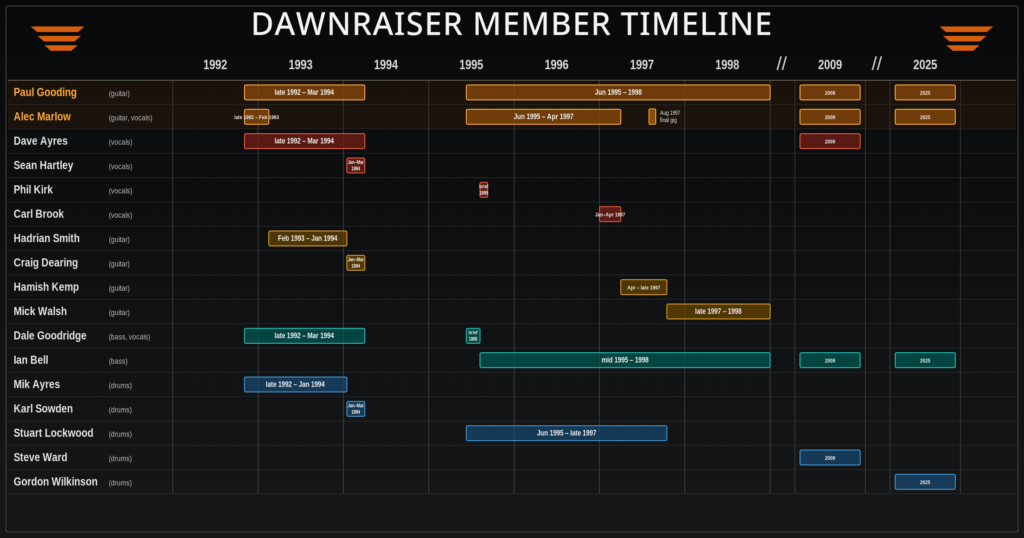
We assembled a full line-up and began rehearsing in earnest. Paul and I were joined by Mik Ayres on drums, Dave Ayres on vocals and Dale Goodridge on bass.
It was a cold winter and we rehearsed in a maisonette in a block called Kildale House on the edge of the Thorpe Edge estate. It was a strange, unpredictable and often volatile environment. The flat was shared by Mik Ayres and his dad Bob and there always seemed to be some kind of conflict going on between them. They were both very headstrong characters (as were all of the Ayres boys). We just sort of got on with it.
Bob assumed the role of patriarch of the band. With two of his sons involved and rehearsals taking place in his gaff, I suppose that was natural.
Although I knew I had some very good, close friends, as had often been the case throughout my teenage years, I never quite felt like an equal part of the wider social group. Not properly anyway. I was very young and still figuring out who I was at that point.
There was often a sense that my company was being tolerated more than valued and I was never quite “in” on everything. I guess I was always looking for somewhere to belong, even though for a time my entire social life revolved around this place.
The dynamic was a far cry from the fun Paul and I had previously had playing together and although our friendship always endured, I naturally felt some distance between us around that time.
In truth, my own involvement in the first incarnation didn’t actually last very long. A badly timed bout of ill health took me out of the rehearsals leading up to our first gig in early 1993. Instead of rescheduling the gig, some members of the band saw fit to draft in our old schoolmate Hadrian Smith as a “temporary” guitarist for it (so I was led to believe). However, he turned out not to be quite so temporary. He was a talented player and a decent chap. I’ll be honest though, it broke my heart at the time, especially the way it all unfolded. As is the case with lots of things that happen at such a young and formative age, it’s an experience that stayed with me and shaped the rest of my musical life.
The band continued without me until 1994, recording three demos along the way – “First Demo”, “Bad Days TFS” and “Supernatural Ability To Avoid Bullets”.
I dusted myself down and went off in search of other musical adventures.
Paul and I found our way back to each other and Dawnraiser was reclaimed and resurrected with a new lineup in June 1995.
The first version of that line-up included bassist Dale Goodridge, one of the original members, alongside drummer Stuart Lockwood. Dale had always been rather restless and I do not think either of us expected his return to be permanent. In the event, it was very brief.
When Ian Bell replaced Dale, something settled into place. Paul and I felt we had found the line-up we had been looking for.
Ian’s recruitment happened remarkably quickly. At the time he was playing bass for a Dark Embrace-adjacent side project called Necromancer, who just happened to be rehearsing in the next room. I popped in and asked if we could have a word. He came into our rehearsal room looking slightly worried, apparently convinced he was in some sort of trouble. Instead, we asked if he’d like to join Dawnraiser.
He said yes immediately and without hesitation.
That simple conversation began decades of friendship and musical partnership. Looking back, both of us regard it as one of the pivotal moments in our musical lives.
What we didn’t realise that evening was that things were not going especially well for him in Necromancer. He had even begun wondering whether to carry on playing bass at all. Ian has often said that I collared him at exactly the right moment. I’m very glad I did because he went on to become one of the finest and most sought-after bass players on the local scene. Mind you, he’d probably tell you otherwise. If he does, don’t listen to him.
This was the version of Dawnraiser most people remember. It was heavier, louder and considerably more focused than our earlier efforts although probably no less chaotic behind the scenes.
Ian and Stuart were very different characters. I wouldn’t say they didn’t see eye to eye as such but they were certainly chalk and cheese. Put them together though and they became an incredibly tight rhythm section.
Phil Kirk initially joined us as vocalist and took us through our first two gigs but by January 1996 it had become apparent that it was not for him as he simply stopped turning up to band sessions. With just a week or so until we hit the studio, I became the singer largely by default.
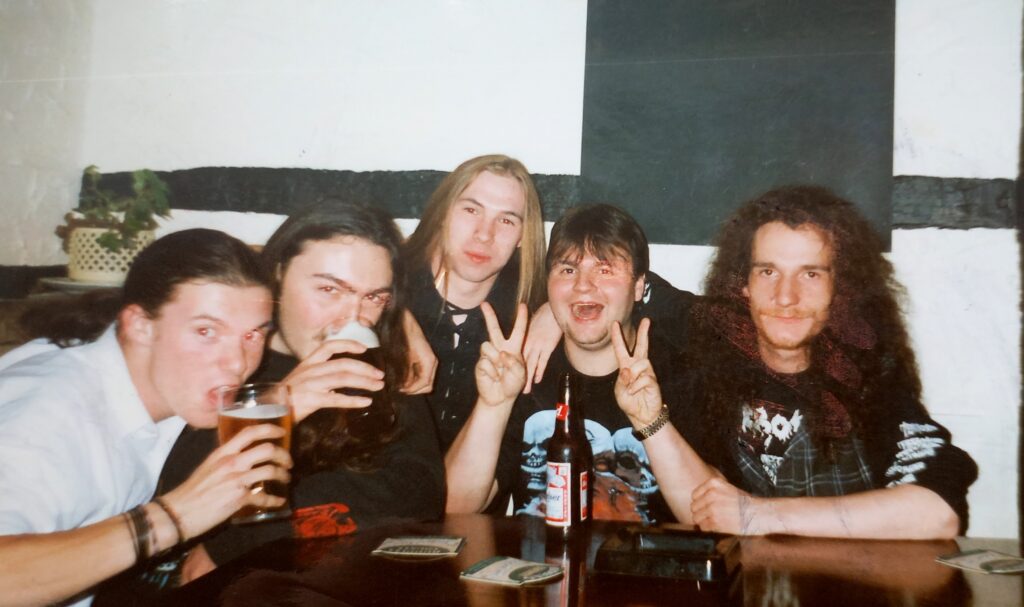
Over the next year or so, we played regularly around Bradford and West Yorkshire, ventured as far as London and recorded three demo tapes at Revolver Studios (later renamed Voltage Studios). Line-ups shifted and musical ambitions changed but for a while we developed a decent local following and created a body of material of which I remain very fond.
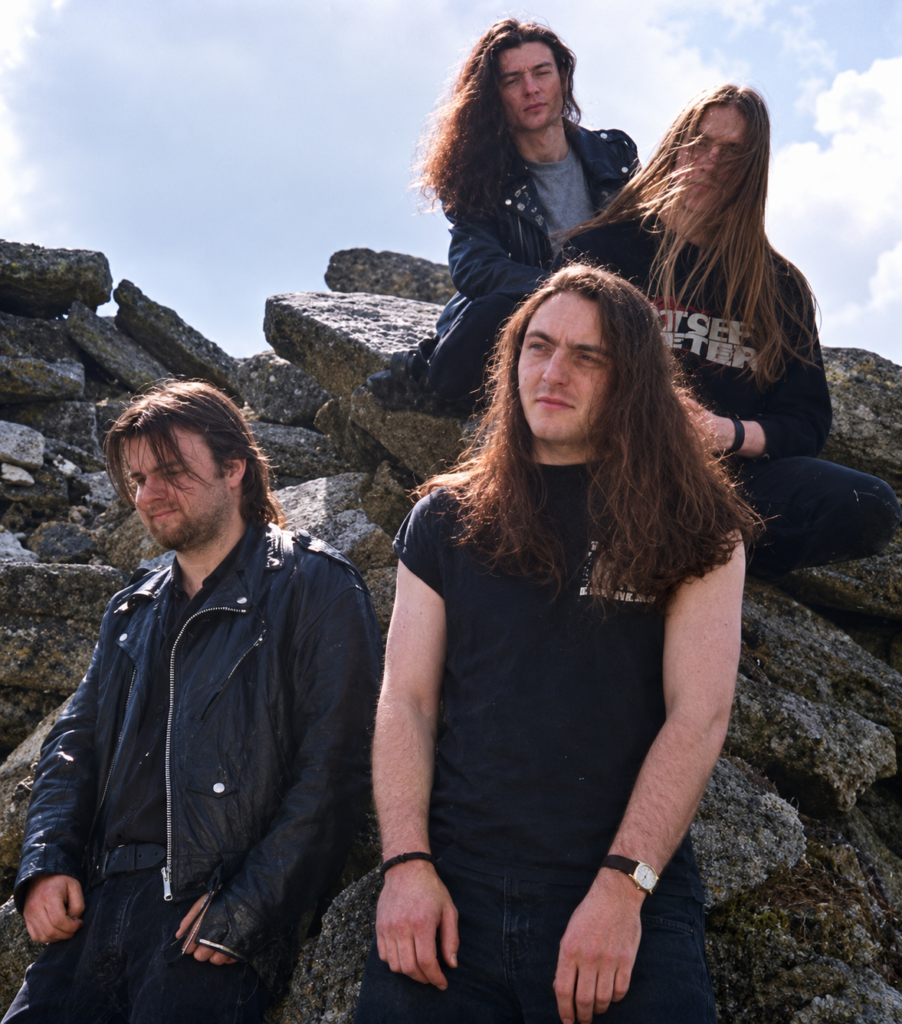
By the spring of 1997, Dawnraiser had begun to lose direction. We’d recruited singer Carl Brook who did a fantastic job of fronting the band. However, after our final gigs in March, it became apparent that we had slightly different ideas about what should happen next. Most of the band wanted to pursue a more contemporary metal sound, taking influence from bands such as Fear Factory and Machine Head.
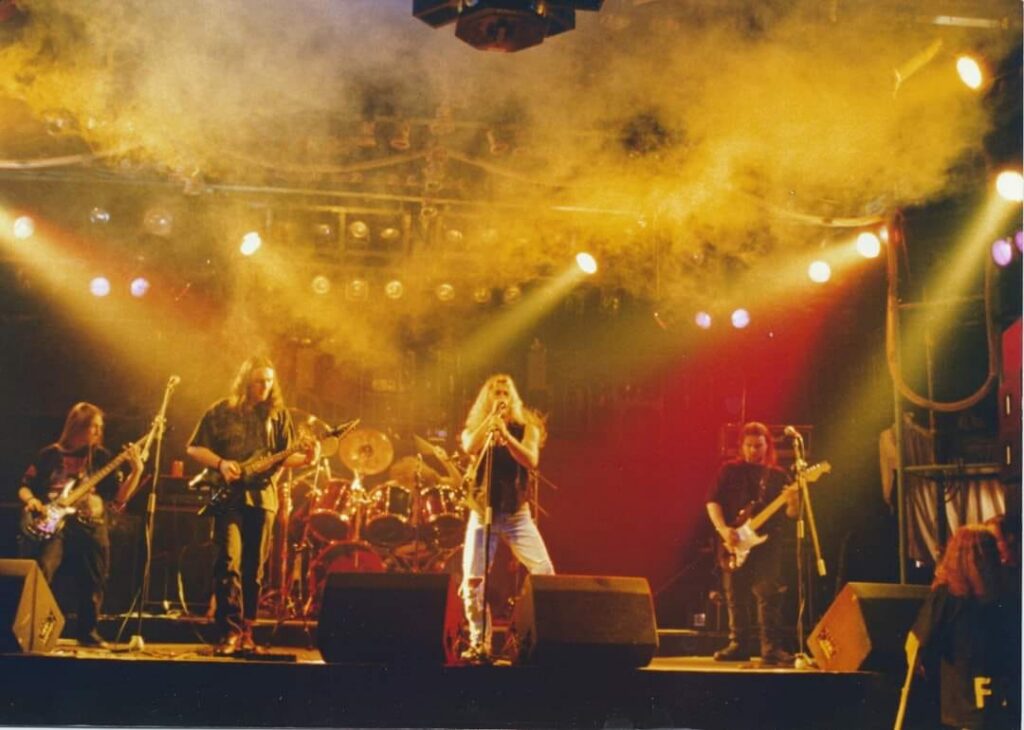
Carl came from more of a classic rock background and the heavier material was never really his cup of tea, so it was felt all round that he was no longer aligned with that direction. The split was fairly amicable but it left the rest of us considering what Dawnraiser should become.
I already knew that I wanted to do something different altogether. I left the band in April 1997 while the others continued towards the heavier, more contemporary sound they wanted.
In the summer of 1997, we reunited at the request of our friend Mark Brookes to play at his wedding. By that point, the band had found a replacement for me in the shape of a very talented guitarist called Hamish Kemp but they had not yet enlisted a singer. Hamish had not been with them long enough to really get his teeth into much of the material, so the set involved the two of us swapping guitar duties while I also attempted to sing. The word “sing” in the context of this event is doing a fair bit of heavy lifting.
The performance itself was far from one of my proudest moments. I really let everyone down by allowing the complimentary beverages to play far too great a part in the day leading up to it. The set was eventually cut short by a well-timed electrical fault. Daryl was with me that night and I remember him saying, “I think we had better go … now!” as he promptly escorted me to somewhere that wasn’t there.
Thankfully, Mark looks back on the event with good humour and he really enjoyed his day. I was never really sure if his wife Fiona ever quite did though. She and I have never really spoken much, either before or after the event. If she ever reads this then please accept my apology for making a tit of myself.
The band continued through several further changes before finally running out of steam in 1998.
Except that it didn’t entirely end.
In 2002, I found myself reconnecting with Paul once again and we began talking about doing something. Although conversations did turn to the subject, what ultimately followed was not a Dawnraiser reformation. However not long after that, we were both on a night out and our mate Beaker from the band Lowlife asked us if we wanted to play with them at The Empress pub. He specifically asked for Dawnraiser. We actually got as far as the rehearsal room with it but not everybody showed enough sustained interest for the gig to happen. I was convinced at that point that it wouldn’t happen again.
Several of us continued to cross paths in subsequent bands and there was a one-off charity reunion in April 2009 called “Moshing For Medicine” that Paul was organising in which Dawnraiser took part. Again, at the time I was quite certain that it would be the final Dawnraiser performance.
My predictions on this subject should probably be treated with some caution. I think my erstwhile bandmates have since adopted much the same attitude.
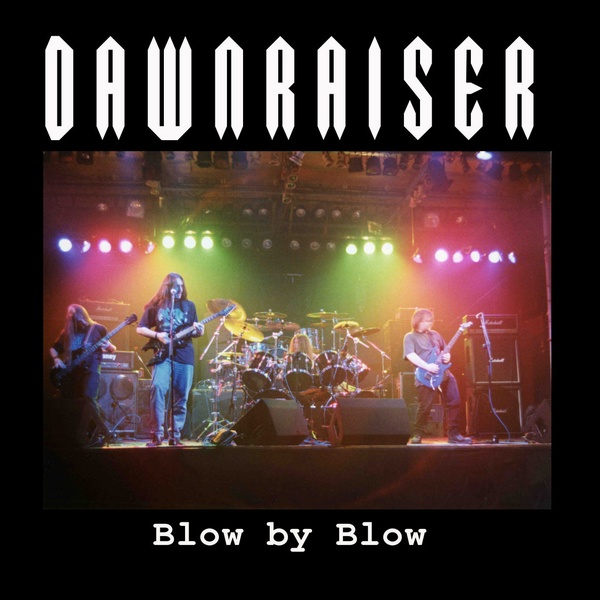
The album we had always intended to make during the 1990s eventually appeared in 2014. Blow By Blow brought together the three 1995-96 demo tapes, previously unreleased material and the later recording of a song called Broken Hope. The recordings were digitised from the original analogue master cassettes and finally presented as the collection we had talked about all those years before.
Then in 2025 the past collided with the present once again.
Paul, Ian and I along with drummer Gordon Wilkinson began rehearsing a selection of the old material for what was intended to be a one-off appearance at my birthday celebration. Dawnraiser returned to the stage in June 2025.
Apparently one-off does not always mean one-off because we did it again in the December.
In terms of gigs, whether anything else will follow remains to be seen. Dawnraiser has never been especially good at ending though so it seems unwise to make any further declarations.
Although I wasn’t involved in the recordings, I restored the old cassette copies I had of the 1993/94 demos in the interest of preserving the band’s history. That was an interesting exercise and surprisingly after all these years, still a little emotionally challenging. Sadly there are no surviving pictures or flyers from then.
I also started work on better restoring and improving the 1995-1998 recordings, going right back to the original master cassettes. I suspect this might be an ongoing project for a while. There’s also at least one track from the later period which we never recorded, so there’s still a little unfinished business to address if or when we get the urge.
The intention of this section is to bring together the story, music, photographs and assorted surviving fragments from the band’s history. Like Dawnraiser itself it will probably always remain a work in progress.