
Purity Cries began at a point when my musical path was diverging from the direction Dawnraiser was taking. By the spring of 1997, most of the band wanted to pursue a more contemporary metal sound while I increasingly felt the need to explore something different.
Around that time, I began reassessing the way I wrote and exploring my gothic rock influences more deeply. That helped set the scene for what was to become the next chapter.
And what a dark, creative and crazy chapter it was.
Phil Kirk and I had already talked about putting something new together and Purity Cries began to take shape in the spring of 1997. From the outset, the music was a considerable departure from the comparatively straightforward metal I had previously been playing. Phil was particularly determined that I should leave old, more conventional habits behind in terms of guitar playing and although his methods could sometimes be fairly intense, that pressure pushed me to dig much deeper. Gothic rock, industrial music, psychedelia and progressive influences all found their way into the sound while atmosphere and experimentation became increasingly important.
The original line-up also included Stuart “Nibby” Niblock on guitar, Daryl Parson on bass and Drax on drums. Nibby remained with Purity Cries from beginning to end and was a constant presence through every version of the band. Daryl was replaced by Ian just a few months in, while Drax moved on not long afterwards.
Our communication with Daryl in 1997 left an awful lot to be desired and we treated him most unfairly. Although there was a sense that the musical chemistry was not quite right, we made the decision without affording him the respect he deserved. The way we dealt with it was atrocious. I fully accept my part in that. Given my own past experiences, I should have known better. It is something I shall always regret. A rum do indeed.
It took years for our friendship to recover and I am very grateful that it did. That said, there was ultimately a sense of relief on both sides when the band and he parted ways and Daryl found a much more suitable home with Tony Wildwood in The Enchanted.
There was no particular drama surrounding Drax’s departure; he was simply the sort of person who rarely stayed in one place for very long before moving on to whatever came next.
For those first few months, rehearsals took place on Sunday afternoons at a house that Phil shared with our mate Al (affectionately known as Pal Mal). The house was on Greenhill Street in Bradford Moor, which was not really an area known for rock n roll. We started out as we meant to continue, doing things on our own terms and we seemed to amass our own little entourage. The rehearsal sessions turned into mini community events of sorts, where the consumption of Inch’s Stonehouse Cider played quite a prominent role. The local corner shop couldn’t order enough of it at one point and actually gave us a discount for ordering multiple bottles. 1997 was a mental summer and there was a palpable feeling that something unique was happening. Eventually, it became apparent that rehearsing there was unsustainable and we needed to relocate to a proper rehearsal room. We returned to Voltage Studio once more to begin the next phase.
By 1998, drum machines and sequencing had become central to the way we worked and technology began to play a much greater role in the music. It opened up an enormous range of creative possibilities and helped Purity Cries develop a character quite unlike anything we had done before.
As the band developed, Ian and I forged a particularly strong musical partnership around the electronics, sequencing and atmosphere that had become increasingly central to our sound. Over time though, the same technology that had initially liberated us began to feel increasingly restrictive. With ever more elaborate arrangements and two guitars in the mix competing for space, I found myself with less room to breathe musically and became increasingly claustrophobic within it all.
Over the next few years we played regularly, recorded two demo CDs and accumulated a sizeable collection of material. The band could be remarkably creative and exciting but it was also intense, chaotic and increasingly dysfunctional. That dysfunction was only exacerbated by the tumultuous nature of our respective personal lives. Those were very dark times for me.
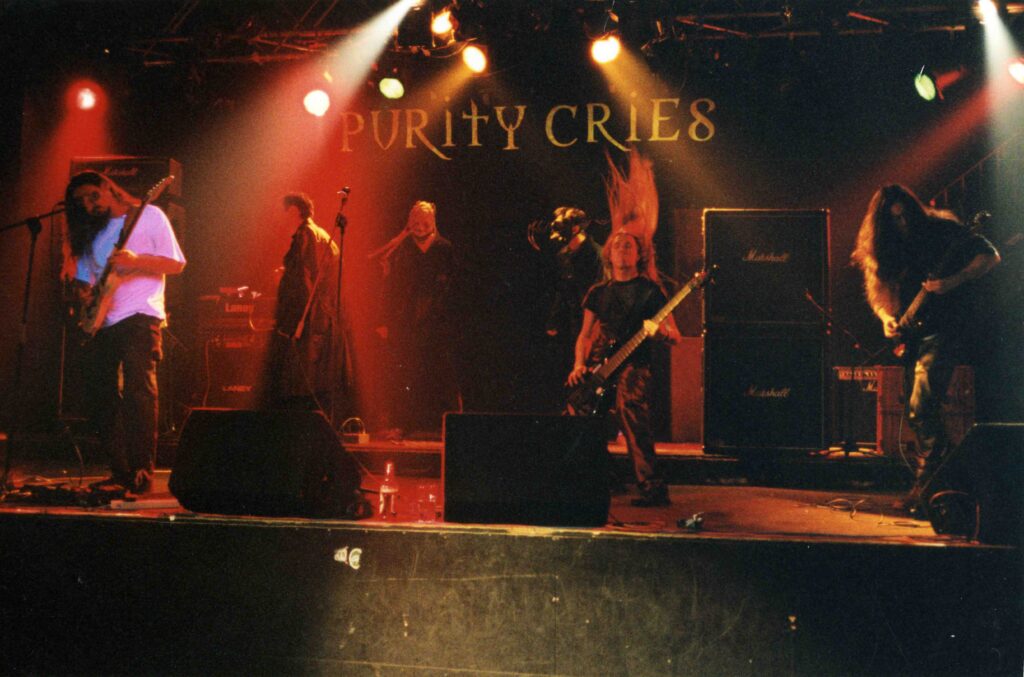
That said, we had a great little scene which centred mainly around Voltage Studio and The Empress pub. Purity Cries, Bloodstream and The Enchanted were the three prominent bands within it. We had all been friends for years and regularly drank together, attended each other’s gigs and dropped in on one another at the rehearsal studio. We occasionally formed little side projects and even swapped members over the years.
The Enchanted was the band Tony Wildwood and Daryl Parson formed after Dark Embrace while Bloodstream emerged around 1997 from a group of the early-nineties Mannville crew. Ian would eventually join them.
We were all very good mates but there was sometimes an undercurrent of unspoken competitiveness and we could all occasionally close ranks a little. There was no real malice in it but looking back, we could perhaps have done more to help rather than hinder one another. We were all in our early twenties and full of everything that entailed. Tony and I reflected on that years later.
Bloodstream and The Enchanted both went on to enjoy considerably more success than Purity Cries in the metal underground scene. I think they were simply more driven and organised. By contrast, we tended to have our heads in the clouds somewhat.
In summer 2000, the three bands embarked upon a short tour together, which we called Bradford Invades Britain. It lifted everyone’s spirits enormously and was such a laugh.
By the latter part of 2001, I had reached the point where I could no longer continue with the band and left for the sake of my own sanity. The dysfunction, claustrophobia and growing internal conflicts were exhausting and I had lost a sense of myself along the way.
Our last gig together was at an all day benefit gig for the Priestley Centre (aka Bradford Playhouse) called “Punk for Priestley”. To this day I remember very little about the event, such was the quantity of alcohol consumed. There is video footage of it which I still haven’t brought myself to watch. I really was not okay.
Purity Cries carried on briefly with our mate and all round top geezer Jaz Rhodes taking my place before finally coming to an end in early 2002.
My head was in bits and I decided I was done with playing in a band. I even sold my amp. However, after about a month, fate had other ideas.
Despite the circumstances in which it ended, I remain immensely proud of much of what we created. Purity Cries gave me the freedom to explore sounds and ideas that would never have found a natural home in Dawnraiser. It also taught me how easily technology can begin to crowd out the people making the music. For all the chaos surrounding it, the project had a profound influence on everything I did afterwards and left me with a much greater awareness of the need to leave space for the people within it.
More than two decades later, Ian, Phil and I have begun revisiting some of that material from a studio perspective. There will be no return to live performance but Purity Cries still has unfinished business.