
Sometimes the biggest changes begin in places that already feel familiar.
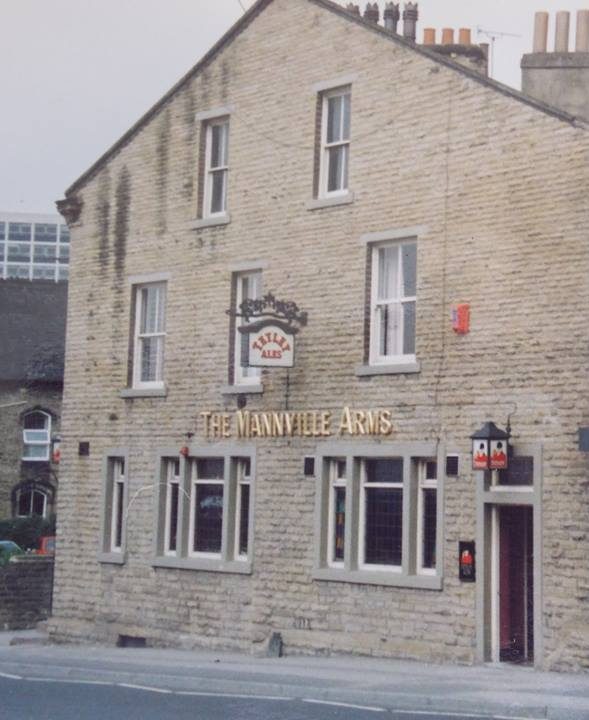
By 1994 the Mannville Arms had become a regular part of my life. It was always bustling, usually packed and I already knew plenty of people who drank there. I had friends, I had somewhere I belonged socially and I was becoming increasingly immersed in Bradford’s metal scene.
What I had not found was anyone who wanted to start a band.
I had recently come through the end of an intense relationship and was still finding my feet again. Looking back, I can see that I had thrown myself into it with rather more intensity than wisdom.
Youth, eh?
Anyway, one evening Tony Turton, later known as Tony Wildwood, approached me completely out of the blue.
The timing could hardly have been better, although I did not appreciate that at the time.
We had barely started talking before he asked whether I knew any bass players. As the conversation drifted towards music, he mentioned My Dying Bride and Paradise Lost and explained that this was the direction he, Craig Daynes and Daryl Parson wanted to take.
It happened to be exactly the sort of music I had just started listening to.
I told him I had a bass.
From there the evening gathered momentum remarkably quickly. Tony introduced me to Craig and Daryl and by the following day I was rehearsing with all three of them.
Tony and Craig had grown up together and were already best mates. They had only met Daryl relatively recently in much the same sort of way they had just met me.
I arrived expecting to play bass. During the rehearsal Daryl decided he would much rather play bass than guitar and afterwards suggested we swap instruments.
I never actually played that bass again.
There had been no audition, no elaborate plan and no carefully organised recruitment process. One conversation in the Mannville and suddenly I was in a band.
Emma Pearson joined a little later after we answered an advert she had placed on the noticeboard in the Wax Museum record shop. None of us knew her beforehand.
Simon Thorley came along after that. We worked at the same place and had been friends a little while. It began when I noticed him wearing a Marillion badge in the canteen and started a conversation about it. That quickly escalated into drinking beer together every weekend.
Looking back now, the strange thing is how quickly it all came together. Apart from Tony and Craig, none of us really knew each other when the band began.
What made Dark Embrace feel different wasn’t simply the music. It was the camaraderie.
Until then, I had been largely unaware that being in a band could feel so open, collaborative and enjoyable. My previous experience had left me with a very different impression.
Nobody seemed interested in proving anything. We just wanted to write music.
Before long rehearsals became gigs, weekends disappeared into the band and the friendships developed.
Everyone brought different influences. Doom, death, gothic music, progressive rock… nobody seemed concerned whether they fitted neatly together or not. We simply wrote what excited us.
I discovered bands I might never have listened to otherwise, met people I would never have crossed paths with and gradually became more confident in following my own musical instincts instead of worrying whether they fitted into somebody else’s expectations.
One of the clearest memories I have now isn’t actually about the music.
It’s how spectacularly bad we all were at communicating with one another.
We were mostly between eighteen and twenty years old. We cared about the band and we cared about each other but we were still trying to work out who we were ourselves. We felt things intensely but rarely explained them particularly well.
Many years later Tony, Craig, Simon and I found ourselves talking about exactly that.
We all came to much the same conclusion.
We simply didn’t have the emotional tools back then.
That doesn’t excuse anything but it does explain quite a lot.
When Dawnraiser reformed in 1995, I carried on playing in both bands for a little while. Nobody in either band was asking me to choose but a couple of people suggested that I should concentrate on Dawnraiser.
For reasons I still don’t entirely understand, I let myself become convinced that I had to make a choice.
Looking back, I don’t think I did.
I wasn’t leaving because I’d fallen out with anyone or because I’d stopped believing in the music. I simply accepted the idea that one band somehow had to come at the expense of the other. How wrong I was.
It’s one of the few musical decisions I genuinely regret.
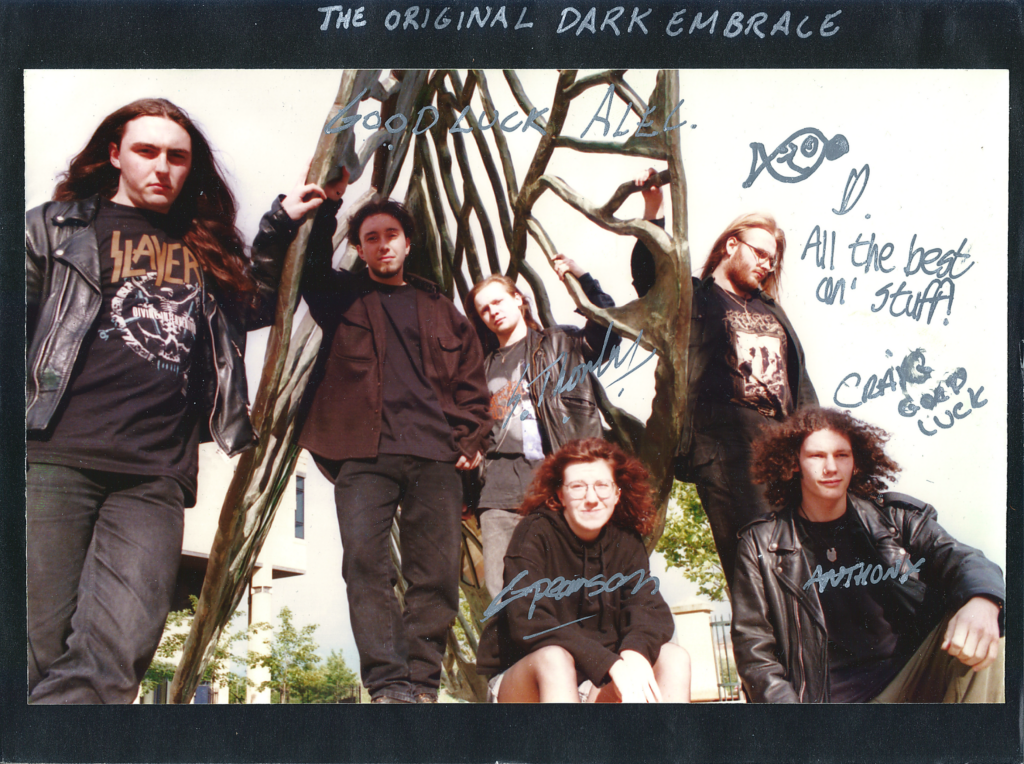
The silver lining was that the band would go on to flourish with their new guitarist Rohan Lander for a couple of years after that. He was an incredible musician and a bloody nice bloke.
Many years later there was some tentative discussion about getting Dark Embrace together again, at least in a studio capacity and to my surprise, I found the idea much more difficult than I expected. It stirred up memories I hadn’t visited for a very long time and, at least initially, I wasn’t sure I wanted to.
Oddly enough, I think that turned out to be a good thing.
The passage of time seems to have quietly healed the things that needed healing.
Today we’re at least able to share the same online group conversations again and the thought of all of us meeting up no longer fills me with the trepidation it once did.
Dark Embrace only occupied a relatively small part of my life.
Yet somehow it’s become one of the chapters I find myself reflecting on most fondly.