Welcome to the Machine — Part I: Building the Invisible Bandmate
How our backing track rig evolved from simple drums playback into part of the live show
In Part I of my Welcome to the Machine series, I describe the role and importance of the backing track within our band and how it has evolved.
Plenty of bands (in fact more bands than you might think) use backing tracks, drum machines, sequencers and samples as part of their live sound. Sometimes it’s a practical thing, sometimes it’s an aesthetic choice and quite often it’s a bit of both. For Dawn of Elysium, it became practical very quickly. In the beginning we had a live drummer, a personable chap called Phil (unfortunately not that Phil). However, being in a band didn’t seem to be for him and when we parted ways not long before a gig in March 2013, we suddenly needed a solution that would allow us to play.
At first Charles was still there as our live keyboardist, so the backing track only really needed to carry the drum parts. Over time though, the role of the backing track grew into something much more central to the band. Samples, sequenced synth effects, backing vocals and additional parts gradually became woven into the live sound, adding atmosphere and texture that became integral to how the songs were expressed, always of course complementary with Charles’ highly skilled live playing. What began as a fairly urgent workaround eventually evolved into a proper live playback system: carrying arrangements, filling the gaps, feeding the click and eventually becoming part of the control system itself.
I decided very early on that I didn’t want to use a laptop of any description on stage. Whilst we got away with it for our first gig of this nature (a very old Windows XP laptop playing WAV files from an ancient version of Winamp), I’d seen it go wrong far too many times. I also wanted something at least a little professional, so I didn’t want to use MP3 files played back on a phone or MP3 player. I also did not want the rigmarole of using electronic instruments such as drum machines or sequencers in a live setting, since I considered it would be limiting and high maintenance. I had an Alesis SR16 which we used for writing at rehearsals but it was a ballache to do anything with outside of playing the preset patterns. Besides, I was establishing my workflow using a DAW (Garageband at the time, although I later graduated to Logic Pro).
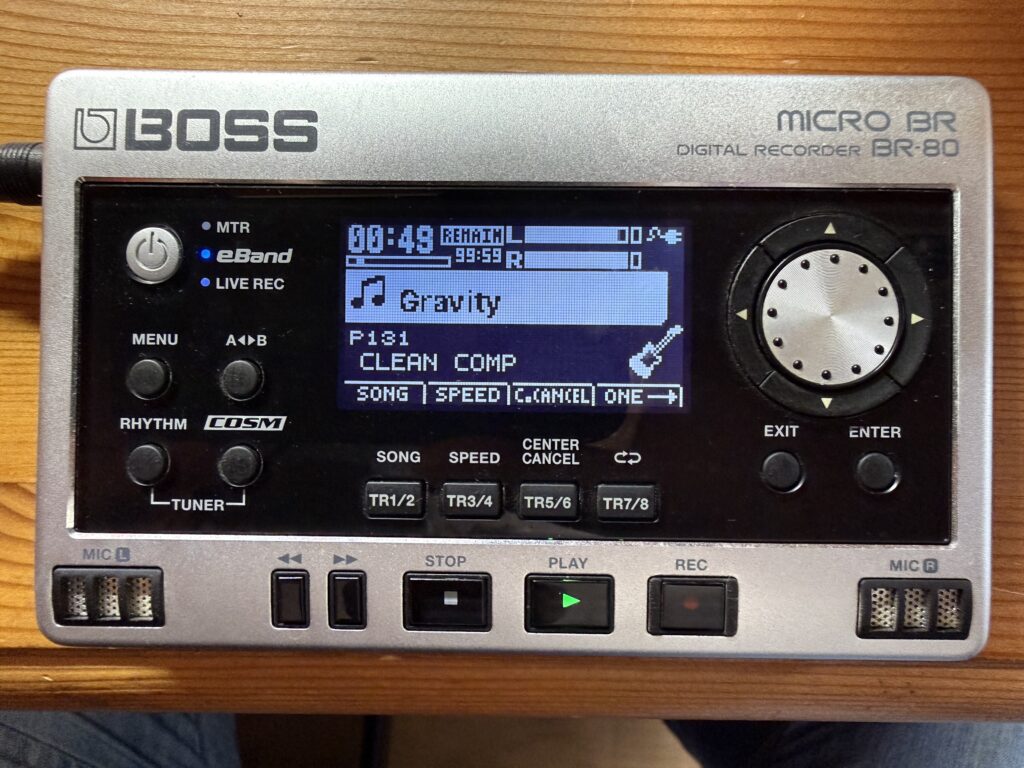
From 2013 up until about 2021, we used a Boss BR80 to play our track. We only needed to play back a stereo WAV of each song and so used it in 2-track mode (or e-Band mode as it’s called on the BR80), Charles dutifully changing the song as we played through each set. I’d often splice songs together to create effective segues and suites. It worked very well and sounded right enough. It was also useful for recording rehearsals for a time (when we were using the SR16 of course).
In 2021 I joined another band which included a live drummer and backing tracks and I found myself in the position of putting the backing tracks together for them too. The drummer needed a click track to play along to. He’d hitherto used a rack-mounted minidisc deck which routed a mono backing track out of one channel and the click out of the other. My inner geek actually really dug the idea of using minidiscs. However, since I had spent a lot of time making some rather expressive, stereo backing tracks, I didn’t really want to resort to playing them back in mono. There are people who argue that you don’t need stereo backing tracks in a live setting but … well … they are wrong – let’s just leave it at that 😉
So, I looked at what was on the market. There was disappointingly very little available but the unit which stood out at the time was the Cymatic LP16. This allowed for the playback of 16 mono wavs simultaneously, each on its own output. This way I could have Backing L + R and also a click, fed out to a submixer. Despite some teething issues in a live setting, it worked well for the short amount of time I was in that band. After my departure, I understand they sourced another LP16 and continued using it.
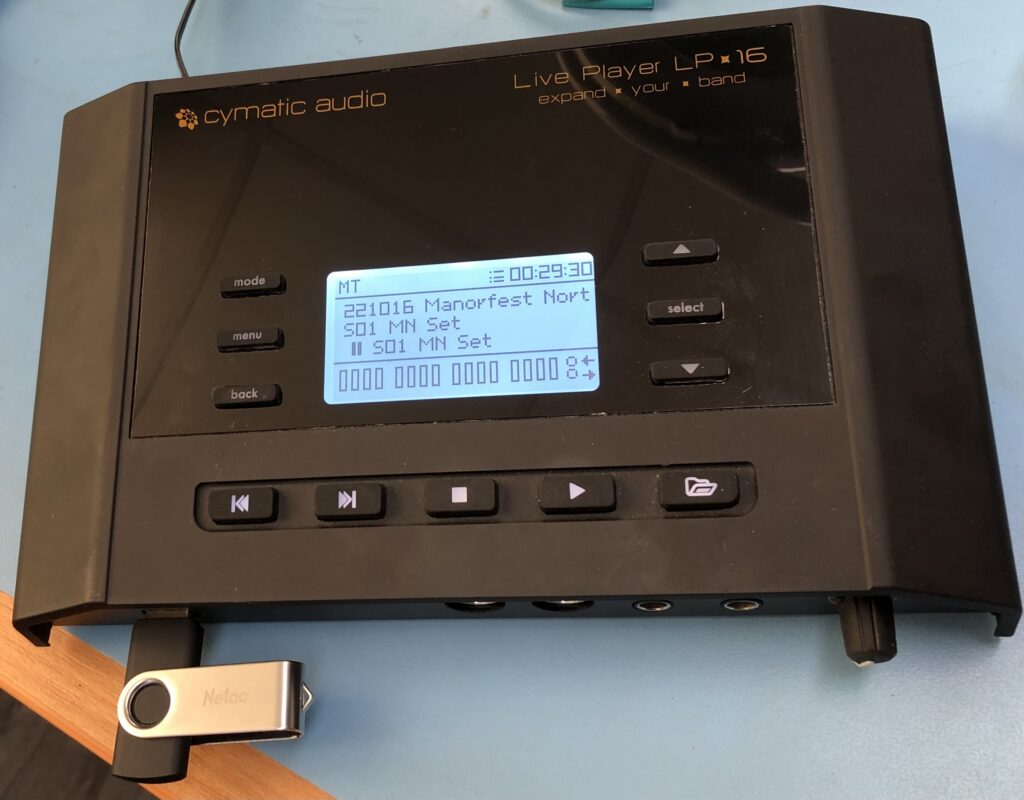
Of course I employed the LP16 for Dawn of Elysium as well. Although at that point we were still just using it to play back a stereo wav of each song. However, it allowed us to create set lists and felt very much more fit for purpose than the BR80, despite being not without its idiosyncrasies.
In 2023 the band underwent a major transformation and we found ourselves with a live drummer. At that point, the unit came into its own. Although Gordon was to be taking care of all drum duties, thereby negating the need for programmed drums, we still wanted to retain the backing track content which had in effect become an instrument in itself. Therefore a click would need to be fed to him. For a little while we still had the backing in addition to Charles’ live keyboards. However this was not to last as a permanent arrangement, since in mid 2023, Charles had to take a step back from active duty in the band to concentrate on life commitments. Therefore we needed a way of being able to play back his parts but also have the option not to, should he return. The LP16 was ideal for this. We simply routed the keyboard parts out through their own stereo pair.
The uTool software supplied with the LP16 worked quite well. Basically you create a song, assign the various outputs with WAV files (which roughly correlate with the stems from the Logic file) then save it. You can then create a set list which consists of any number or combination of those created songs.
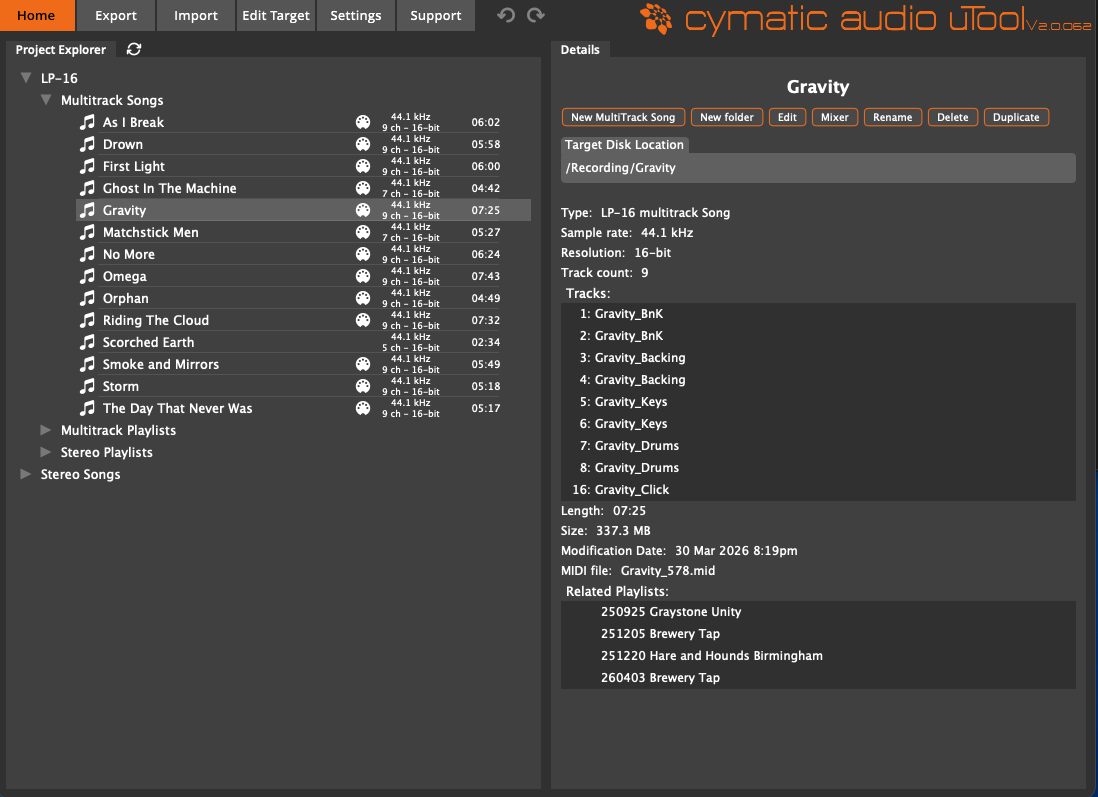
The drawback was that if you wanted a stereo pair of outputs on the unit to carry a combination of stems, then you needed to create a stereo mix in Logic and bounce it down to a pair of tracks, which is what I was used to doing anyway when creating a stereo backing track previously.
I briefly toyed with using a small sub mixer so that keyboards and backing tracks could be mixed externally but that just introduced more complexity and stress.
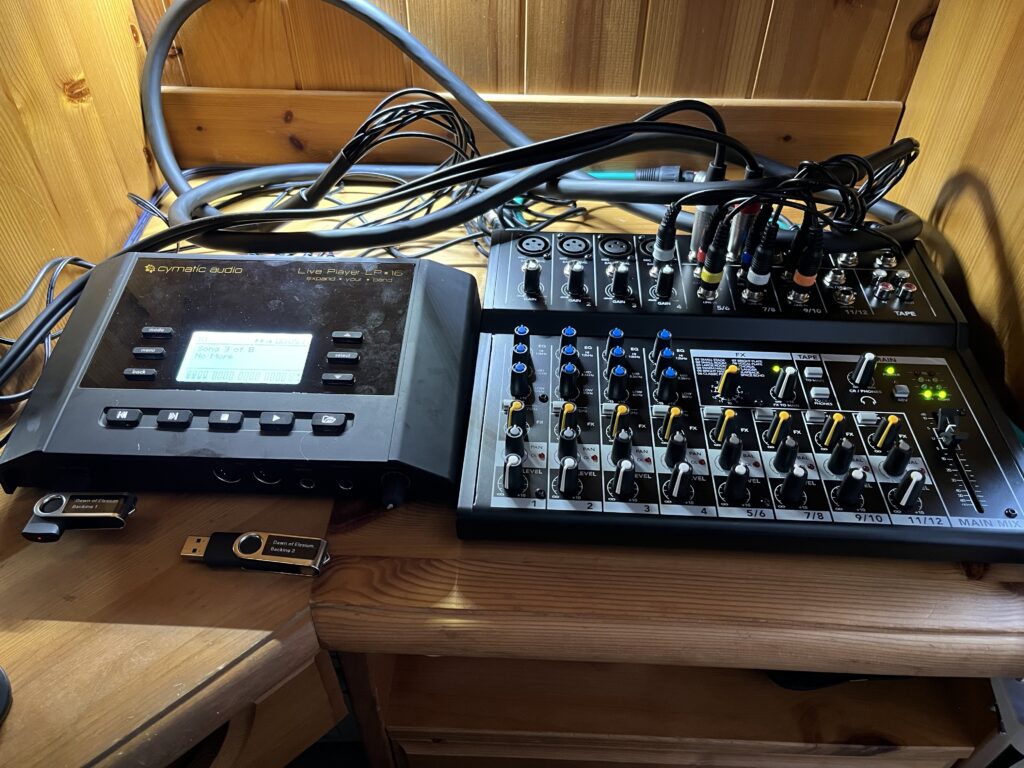
Once Charles was absent from the stage I had to use an external foot pedal to play/pause the backing track. This worked OK but it was just play/pause or play/stop and the LP16 itself was really tricky to use on the fly.
I did keep eyeing the market and was becoming increasingly interested in the Idoru P-1. It had only 6 outputs rather than 16 but the way it worked was quite different. It was also not the cheapest of units either. I eventually bit the bullet and adopted it. It was far more suitable for our purposes. Built like a tank, foot pedal form factor and sits nicely next to my existing floor furniture, which at the time was the Boss VE500 and the Boss GX100. I have since retired the VE500 from active duty much to the rejoicement of several sound engineer friends of mine. Despite the VE500 being one of the better ones available, vocal FX pedals are almost universally disliked by live sound engineers.
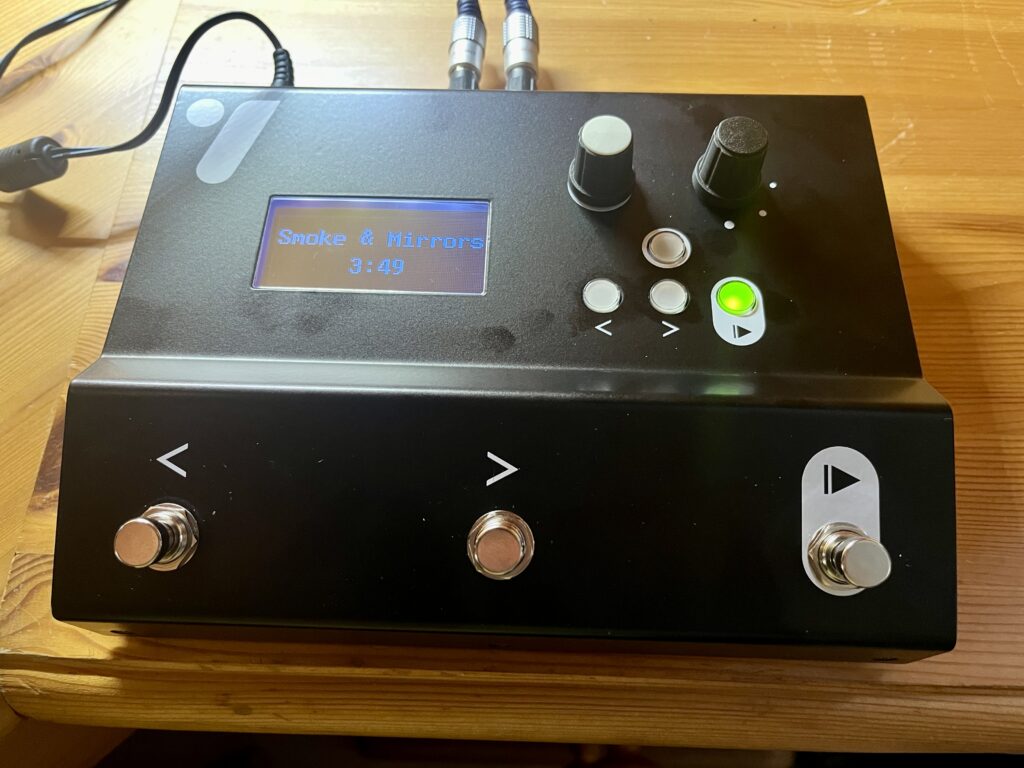
The P-1 has 6 balanced (not isolated) outputs to which you can assign a combination of any number of input files and tracks can be paired to stereo pairs/WAVs too, which made song creation a breeze. Backing, Keys and Click were assigned as inputs as was a drum mix in case we needed to run through anything without Gordon. The assigned outputs changed a little over time but eventually settled on channels 1 + 2 being a stereo mix of backing + keys, output 3 being a mono version of the same in case we play anywhere that didn’t have the spare channels (something which has never quite but almost happened a couple of times before I protested 😉 ), output 4 being the click, 5 being the mono rehearsal drum track and 6 being a click too (to allow for some backwards compatibility with previous assignments and also to enable a separate click route if required) Anyway I’m getting ahead of myself a little, more will become clear.
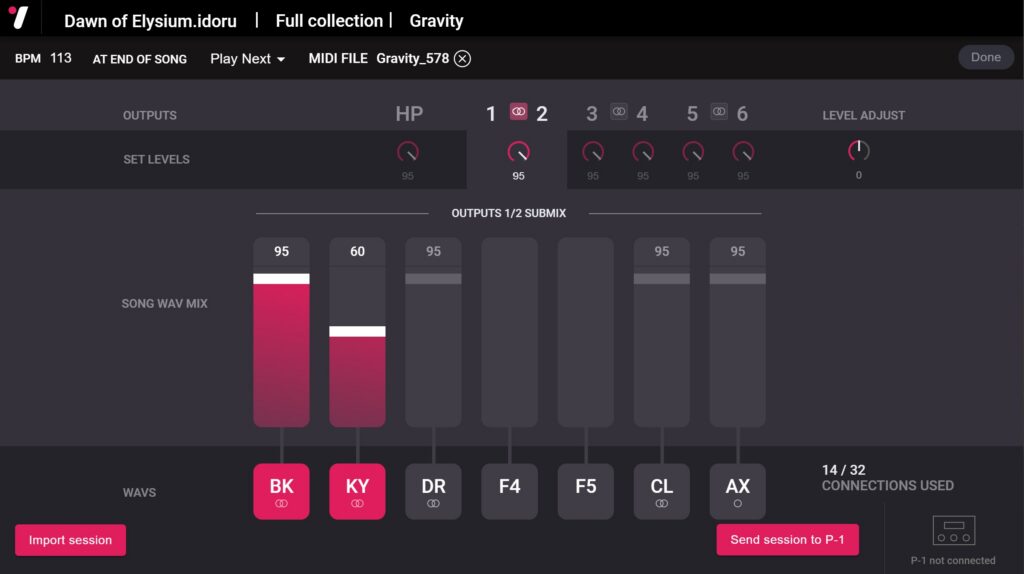
Next I looked into the MIDI capabilities with a view to having the backing machine control my patches on the fly. When singing and playing, it can be distracting simultaneously tapping pedals to change sounds, especially so when I used a unit for each role. A well-compiled MIDI file would enable the P-1 to do it for me in real time as the backing track plays through. I never really bothered looking into this with the LP16, since I read many accounts of the MIDI not working properly at different BPMs. With the P-1, it worked rather well, once I had got my head around how to put the file together in Logic.
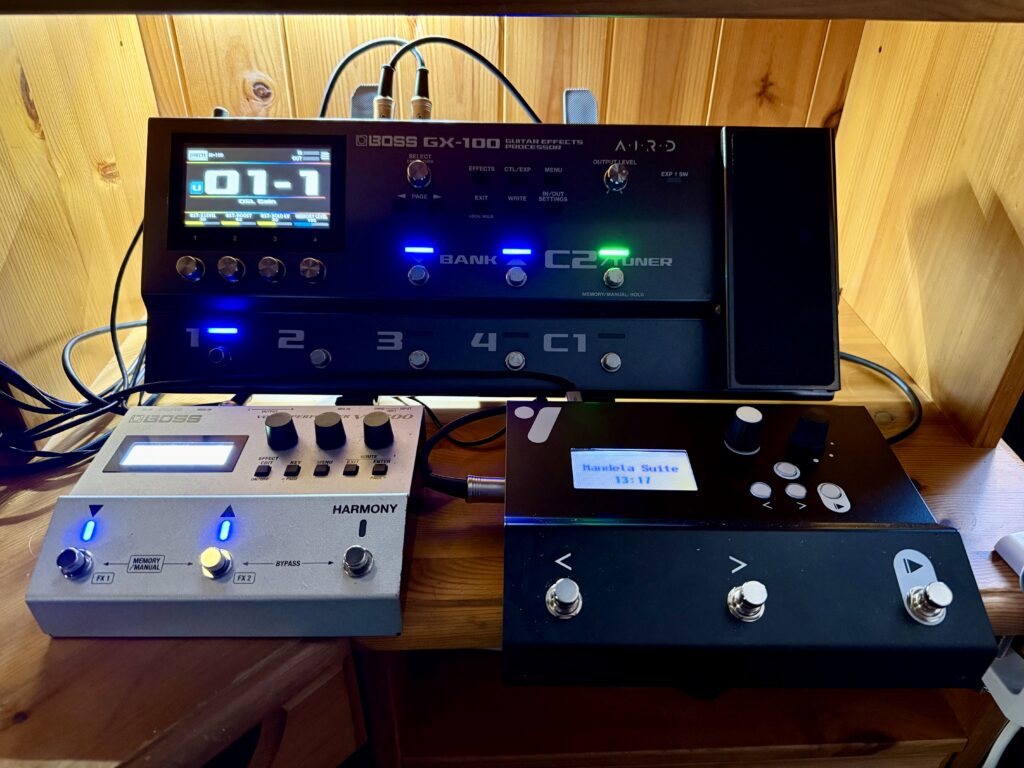
By this point, the backing track rig had evolved from being just a way of playing extra parts. It had become part of the live system: starting songs, carrying the missing instrumentation, feeding the click and even changing my sounds for me. It had, in its own way, become another member of the band. Since I had spent an awful lot of time not only creating the backing track content but also designing the system itself, it was very much here to stay.
Around the same time, a separate problem had been quietly becoming impossible to ignore. However well-prepared we were, there had been too many occasions where we simply couldn’t hear ourselves properly on stage. Vocals were almost always the first to suffer but once click tracks, cues and additional parts became more central to the show, the whole monitoring situation started to feel like something we could no longer leave to chance.
So while the backing track rig had finally found its shape, it also pointed quite naturally towards the next problem to solve: if all of this was now important enough to build properly, then we needed to be able to hear it properly too.
Discover more from Outpost 10
Subscribe to get the latest posts sent to your email.